Full-Service Construction Engineering & Project Management Consulting Firm
January 20, 2023
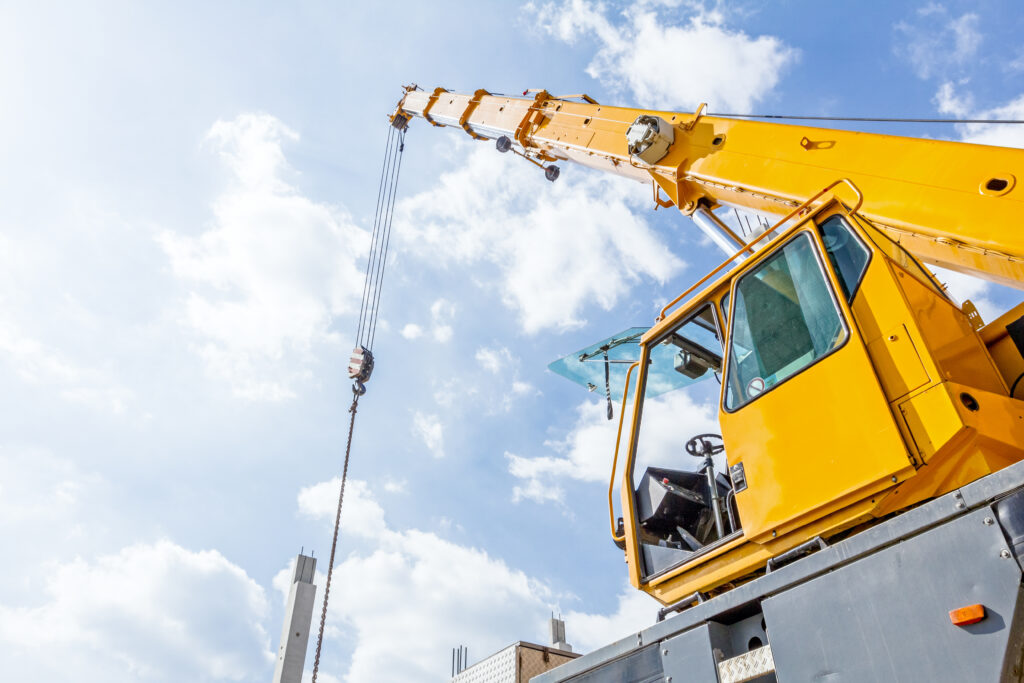
Choosing the right crane is one of the most important decisions for success and efficiency on any construction project. Not only will your decision impact the workflow and timeline of the job, but it is also critical to safety on and around the job site.
Several factors of a construction project lead to benefits and drawbacks in choosing different crane types. When assessing all major elements of a crane's required location and workload, the best crane for the job will present itself. Initial considerations in choosing a crane include the project or activity’s duration, how permanently the crane will be in position, the weight and size of the material being lifted, the conditions of the worksite and surrounding area, and the final location where the equipment will be installed.
Let's go into detail about choosing the right crane for the job site.
Pick the Crane to Match the Construction Site
Review all available drawings
Fully understand the job requirements before reaching the job site. This will help you form a surveying plan to know what to look for when you're on location. In many cases, progressing phases of construction can change the project's landscape. So, relying on drawings and blueprints will guide you to good decision-making when the current state of the property does not match crane deployment environments. Consider what the work area will look like when crane operations are going to occur. New construction on a private lot is optimal because you will have the most recent and accurate as-built drawings and design drawings.
Where is the construction site located?
Consider site conditions for the crane setup. If the crane is set on asphalt or concrete, you could use a mobile truck crane. If the crane is on dirt, sand or stone, you may need a rough terrain mobile crane with large off-road tires. If your job site access has unlevel ground or if you need the ability to move the crane location often, a good crane choice may be a crawler crane with tracks.
There are also specialty crane options, such as a SpyderCrane, often having an electric or hyrbrid motor. This means it can be used in areas with poor ventilation or inside a building due to the reduced exhaust fumes. These also have a smaller footprint and lightweight making them a good option for difficult to access areas and small lifts. Some models have up to fifty-two outrigger positions, therefore a Spydercrane operator should have supplemental training and experience to operate the equipment safely. There is no standardized certification for Spydercranes as of 2022, with the closest crane types to validate an operator's experience being boom truck cranes and carry deck cranes. These cranes are often used in very specific applications. They have special engineering parameters for preventing the equipment from overturning and the loading forces they impose on the supporting surface
In many cases, site conditions can pose an obstacle or obstruction to the swing path, such as trees, utility poles and lines, or adjacent structures. Other street objects that should be reviewed include, underground utilities such a piping, vaults, etc. Considerations when accounting for obstructions include not only the work site environment but the lifting requirements of the crane and the material you are moving. In a follow-up article, we will look into choosing a crane for the job type, the material being moved, the pick and set points, and the load capacity of the machine.


 (516) 234-0890